Showing posts with label Level Sensors. Show all posts

Friday, May 3, 2019

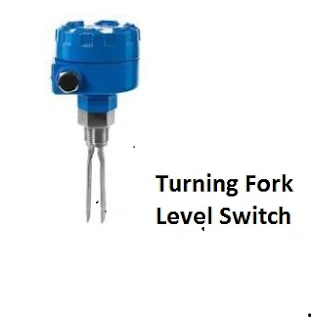
Turning Fork Level Switches

This level switch uses a metal tuning fork structure to detect the presence of a liquid or solid (powder or granules) in a vessel.
Turning Fork Level Switch
An electronic circuit continuously excites the tuning fork, causing it to mechanically vibrate. When the prongs of the fork contact anything with substantial mass, the resonant frequency of the structure dramatically decreases. The circuit detects this change and indicates the presence of material contacting the fork. The fork’s vibrating motion tends to shake off any accumulated material such that this style of level switch tends to be resistant to fouling.
You can also read: Ultrasonic Level Switches
Don't miss out on key updates, join our newsletter list here.

Thursday, February 7, 2019

Ultrasonic Level Switches


This type of level switch uses ultrasonic sound waves to detect the presence of process material either solid or liquid at one point.
The Working Principle
Sound waves pass back and forth within the gap of the probe, sent and received by piezoelectric transducers. The presence of any substance other than gas within the gap detects the received audio power, thus signalling to the electronic circuit within the bulkier portion of the device that process level has reached the detection point.
Ultrasonic Level Switches
Fig 1

Ultrasonic Level Switches
Fig 2

In Fig 1, the sound passes through the gap when filled with liquid (wet gap).
In Fig 2, the sound cannot pass through an air-filled gap (dry gap).
The lack of moving parts makes this probe quite reliable although it may be become fooled by heavy fouling.
Some of the industrial applications of Ultrasonic level  switches include:
  • Leak detection
  • As an overfill alarm
  • Detection of presence of liquids in pipeline
  • Pump Protection
  • Engine oil level control

Wednesday, December 5, 2018

Key Considerations when Specifying Displacer Level Transmitters

Displacer level transmitter is used in Process measurements of liquids across many process industries. In this article we discuss the Principle of operation and industrial level applications that displacer transmitter technology offers.
Principle of Operation
Displacer Level Transmitter

Operation is based on buoyancy force. The buoyancy force works on the displacer which will vertically move in (increasing liquid level) and out (decreasing liquid level) the linear differential transformer (LVDT). Due to this movement, voltages are induced in the secondary winding of the LVDT. These signals are then processed in the electronic circuitry and used to control the output signal.
Industrial Applications
Displacer transmitters are ideal solution for liquids or slurries, clean or dirty and light hydrocarbons to heavy acids with a specific gravity (SG) of 0.23 to 2.20.
Displacer transmitter technology works well in a variety of vessels including process & storage, bridles, bypass chambers, interfaces, sumps and pits up to unit pressure and temperature ratings. They can also handle most liquid conditions including varying dielectric, vapors, turbulence, foam, buildup, bubbling or boiling and high fill/empty rates.
Some of the specific industrial applications include:
Boiler control – The displacer unit provides a stable output signal for valve control on turbulent surface applications, such as feed water heaters, flash tanks, and reactors. 
Interface control on storage tanks – The displacers are tolerant of emulsions. They can track towards middle of emulsion, and are tolerant of unstable interface. They also ignore vapor/liquid interface point above displacer.
Mixing Tank – The displacer transmitter can also be used in harsh production environments like those in a mixing tank. It provides a stable output, easier to configure and is resistant to heavy surging caused by the mixer.
Water elevation – The displacer can be used to maintain a water elevation at a given height by sending out a proportional 3-15 PSIG signal (over a 14 ″ control band) to a control valve to maintain water level at midpoint by regulating the water flow rate out of the separator. The control valve is fully open at 15 PSIG input and fully closed at 3 PSIG input.
In Summary the advantages and limitations of Displacer transmitter include:
Advantages
  • Stable signal in turbulent applications
  • High Pressure/Temperature capabilities
  • No flexure of pressure boundary part

Limitations
  • Shifting SG can affect this technology

Some of the manufactures of Displacer level transmitters include:
Sources: Magnetrol
Don't miss out on our Instrumentation updates, join our newsletter list here
Monday, September 17, 2018

Ultrasonic Level Measurement

Ultrasonic or sonic waves are used in single or continuous level measurement of a liquid or a solid. Ultrasonic waves are also called ultrasound.
Let’s consider the following diagram:
Ultrasonic level measurement

A pulse of sonic waves at approximately 10 kHz or ultrasonic waves at more than 20 kHz from the transmitter is reflected from the surface of the liquid to the receiver, and the time for the echo to reach the receiver is measured. The time delay gives the distance from the transmitter and receiver to the surface of the liquid, and from which the liquid level can be calculated. Since we know the velocity of ultrasonic waves to be around 340 m/s, we can easily calculate the round-trip distance from the transmitter to liquid level and back to the transmitter using the formula: Distance=Velocity X Time
With round-trip distance determined, we can determine the height of the liquid level using the Tank’s height.
Since there is no contact with the liquid, this method can be used for solids, corrosive and volatile liquids.

You can also read: 


Advantages of Sonic and Ultrasonic Devices

Sonic and ultrasonic devices are reliable, accurate and cost effective. They can be used in high humidity, they have no moving parts, and are unaffected by material density or conductivity.

Some of the disadvantages of these Devices includes:

Vibration or high noise levels can affect these devices. Dust can also give false signals or attenuate the signals by deposit build up on the transmitting and receiving devices.

Application
Ultrasonic and sonic devices find common use in Food and Beverage industries where we have liquid level measurement applications; they are also used in Water and wastewater, Pharmaceutical industries etc.

Note: Care should be taken not to exceed the operating temperature of the devices, and correction may be required for the change in velocity of the sonic waves with humidity, temperature and pressure.
Don't miss out on key updates, join our newsletter list here.